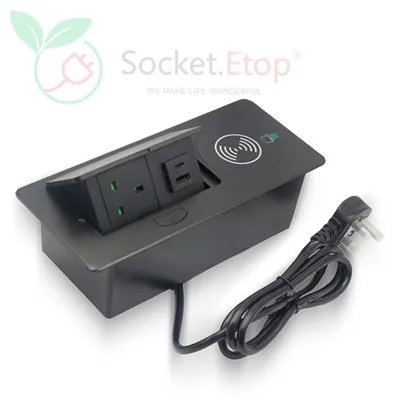
Shell Material: The First Line of Safety Protection
The socket shell is like a phone case-it needs to be both sturdy and flame-retardant. There are two main materials:
PC Plastic: Highly impact-resistant, softens only at 750℃, and self-extinguishes when exposed to open flame.
ABS Resin: Lower cost, but slightly less heat-resistant (begins to deform at around 100℃).
Interestingly, high-end sockets often use a PC+ABS hybrid material, like concrete reinforced with steel bars, combining both toughness and strength.
Conductive Components: The Highway of Current
Sockets and Contacts Determine Current Transmission Efficiency:
Phosphor Bronze: Contains over 90% copper, excellent elasticity, and remains undeformed after 5000 insertions and removals.
Tin Phosphor Bronze: More wear-resistant with the addition of tin, suitable for high-power appliances.
Brass: Low cost but prone to oxidation, mostly used in low-end products.
The Hidden Logic of Material Selection
Don't Just Look at the Price Tag When Buying Sockets:
Choose PC shell + tin phosphor bronze for the kitchen; resistant to oil fumes and capable of handling high power.
Children's rooms need PC sockets with safety doors.
Bathrooms require IP44 waterproof shells and nickel-plated internal copper components for rust prevention.
For sockets that are frequently plugged and unplugged, prioritize phosphor bronze contacts.