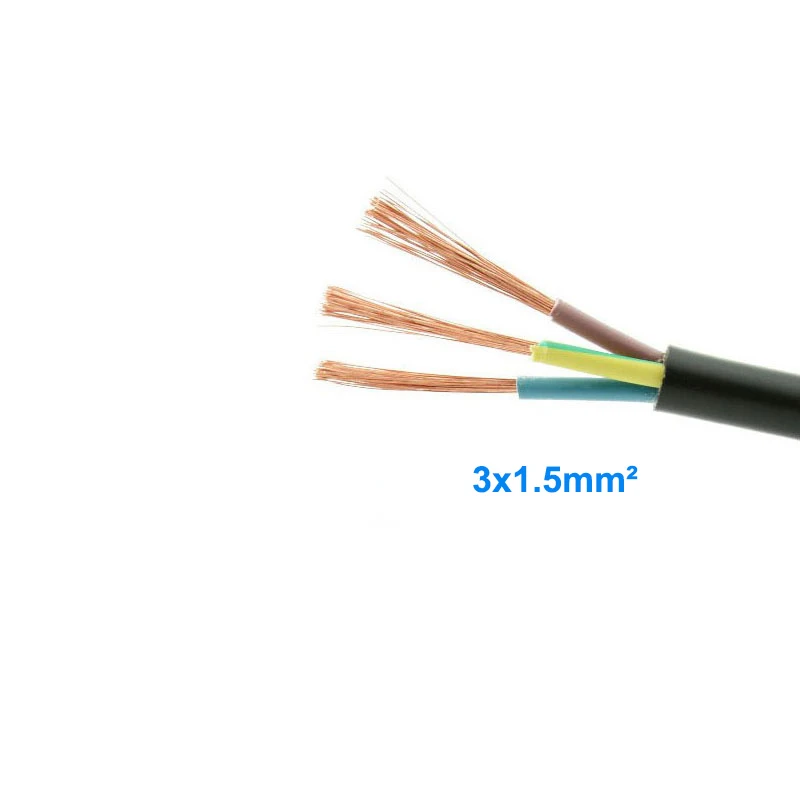
1. Live wire (L-wire): This is the current-carrying conductor that transmits alternating current (AC). The standard domestic voltage is 220V, and its primary function is to deliver electrical energy to appliances. In standard wiring, warm-colored wires-such as red or yellow-are typically used for identification. The switch must be connected in series with the live wire so that, when turned off, the circuit supplying power to the device is completely interrupted, thereby preventing electric shock from accidental contact.
2. Neutral wire (N-wire): Together with the live wire, it forms a complete 220V circuit loop. Under normal conditions, it does not carry voltage; its function is to return the current flowing out of the appliance back to the power grid. Cool-colored wires-such as blue or black-are commonly used for this purpose. Note that the neutral wire can become live if the circuit is broken, so it should never be touched casually.
3. Ground wire (PE-wire): This is a dedicated safety conductor. It does not carry current under normal conditions and is generally identified by yellow-and-green striped insulation. One end connects to the metal casing of the appliance, while the other connects to the earth. In the event of an electrical leakage, it rapidly directs the leakage current into the ground, preventing electric shock accidents caused by human contact with a live casing.
Household electrical wiring is a task for professional electricians; do not alter the wiring yourself, as this could lead to electrical safety accidents.