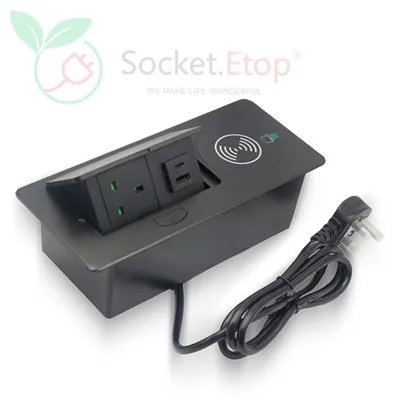
A socket is an electrical device used to connect a power source and appliances. Its working principle is based on the conduction and contact of current. The inside of a socket typically consists of contact pieces made of conductive material (such as copper). These contact pieces make contact with the prongs of the plug, forming a circuit. When the plug is inserted into the socket, the metal parts of the prongs make tight contact with the contact pieces of the socket, and current is conducted through the contact pieces to the appliance, thus powering the appliance. Socket designs also include safety protection mechanisms, such as grounding wires and overload protection, to prevent electric shock and circuit overload.
The working principle of a socket can be divided into the following steps:
Contact Formation: The prongs of the plug are inserted into the socket's holes, making tight contact with the internal contact pieces.
Current Conduction: Current is conducted from the power source through the socket's contact pieces to the prongs of the plug, and then to the appliance.
Circuit Closure: The contact between the plug and the socket forms a closed circuit, and the appliance begins to operate.
Safety Protection: Sockets may be equipped with grounding wires or overload protection devices to ensure safe use.