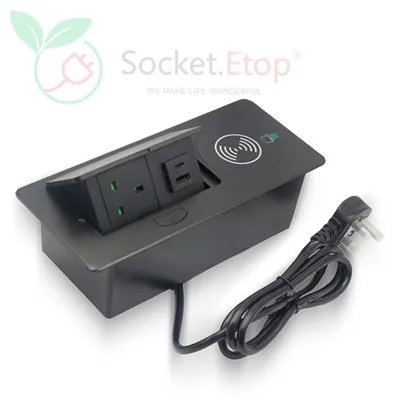
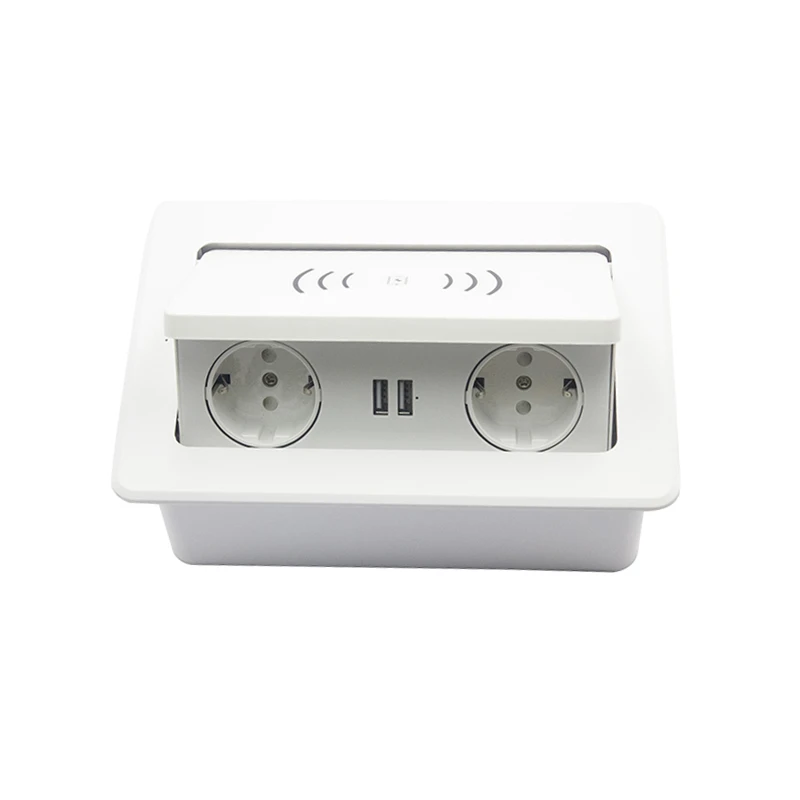
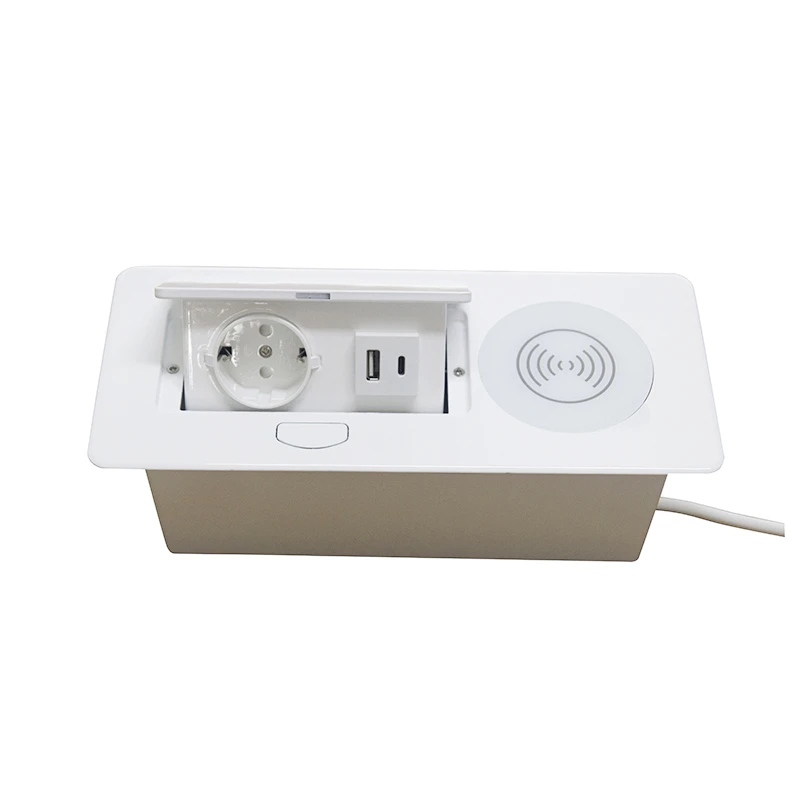
In modern offices, smart homes, and upscale commercial spaces, a desk socket is no longer just basic hardware for accessing electricity. With the rise of mobile working and minimalist interior design, users are demanding "invisible charging" and clutter-free tabletops. Integrating Qi wireless charging technology into desk sockets-whether recessed desk outlets, hidden flip-top boxes, or motorized pop-up power towers-has become the core solution for balancing practical efficiency with spatial aesthetics.
Qi is the universal inductive charging standard, compatible with iPhone, Samsung, and all Qi-enabled smartphones and wireless earbud cases. Users simply place their phone on the socket's induction zone to start charging automatically-no charging cables required, making desktop power access more convenient, safer, and faster.
1. Market Insights: Why End-Users Prefer "Socket + Wireless Charging"
For furniture manufacturers, interior designers, and channel distributors, understanding end-user pain points is key to product selection and marketing. The surging demand for wireless charging desk outlets is driven by three main factors:
Eliminating Cable Clutter for Minimalist Aesthetics: Modern interior design emphasizes clean lines and visual integration. Traditional desks tangled with various charging cords and bulky power strips ruin the look of solid wood, sintered stone, or metal surfaces. Recessed wireless charging sockets hide the power module beneath the surface, leaving only a sleek induction pad on top for a truly "zero-cable" workspace.
Effortless, Top-Up Charging Without Port Wear: In conference rooms, lounges, cafes, and hotel rooms, users often stay for short periods. Instead of carrying cords or borrowing chargers, a "drop-and-charge" experience lowers the barrier to use and prevents physical wear and tear on phone charging ports and cables.
Cross-Brand Compatibility Lowering Commercial Costs: Backed by the widespread adoption of the Qi standard, Apple, Samsung, and other major Android devices can all charge on the same pad. For commercial spaces, this eliminates the need to supply separate Lightning or USB-C cables, maximizing hardware versatility and longevity.
2. For Wholesale & Engineering Clients: Why Quality and Craftsmanship Determine Project Success
As wireless charging desk sockets gain popularity, the market has seen an influx of low-cost, inferior alternatives. However, for socket wholesalers, system integrators, and large-scale engineering contractors, the quality of the wireless module directly impacts project reputation and long-term maintenance costs.
In commercial projects-such as corporate office builds, star-rated hotels, and luxury residential developments-desk sockets are high-frequency fixtures that are difficult to disassemble and replace once installed. Cutting corners on wireless charging craftsmanship leads to severe after-sales issues:
Overheating and Charging Throttling: Cheap coils and low-grade PCBs suffer from poor conversion efficiency, generating excessive heat. This triggers the smartphone's thermal protection (stopping the charge) and accelerates the aging of internal plastic components, creating safety hazards.
AC/DC Interference and Instability: A desk socket houses both high-voltage AC power lines and low-voltage wireless charging circuits. Without proper shielding and circuit isolation, electromagnetic interference can cause intermittent charging or disrupt nearby audio and network signals.
Poor Tolerances and Surface Wear: Engineering projects demand flush, seamless installation. Gaps between the wireless pad and the socket housing allow spills and dust to seep in, risking short circuits. Meanwhile, inferior surface coatings scratch easily within months, degrading the overall interior finish.
3. Core Craftsmanship Standards for Engineering-Grade Wireless Desk Sockets
To ensure your wholesale products remain competitive and reliable, B2B buyers and contractors should verify the following manufacturing standards when evaluating suppliers and samples:
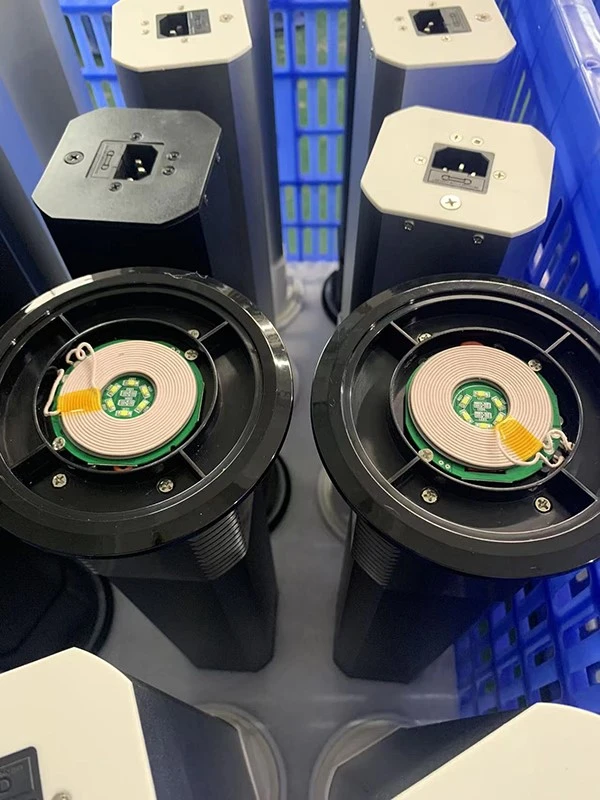
High-Purity Coils & Independent Heat Dissipation: Prioritize modules built with high-purity copper coils paired with dedicated heat sinks or thermal silicone pads. This keeps temperature rise within safe limits during fast charging and maintains stable power delivery.
Comprehensive Safety Protections: Industrial-grade modules must feature FOD (Foreign Object Detection) to automatically cut power if metal items like keys or coins are placed on the pad, alongside over-voltage, over-current, over-temperature, and short-circuit protections.
Physical AC/DC Isolation: Internally, the high-voltage AC power section and the low-voltage Qi DC module must be separated by physical barriers and proper creepage distances to guarantee safety under all operating conditions.
Durable Surface Finishes & Waterproof Sealing: Top panels should utilize tempered glass, anodized aluminum, or high-strength flame-retardant PC for scratch resistance and aesthetics, combined with perimeter silicone gaskets to protect against accidental liquid spills.
Compliance Certifications & Aging Tests: Verify that the product passes Qi compatibility testing and target market electrical safety certifications (such as CE, RoHS, UL, or regional equivalents), and request full-load continuous aging test reports from the factory.
Integrating Qi wireless charging into desk sockets is more than a response to modern convenience and design trends-it is a strategic way for B2B buyers to add product value and escape low-price, commoditized competition. By maintaining strict standards for internal circuitry, thermal management, and exterior craftsmanship, every wireless charging socket delivered to a project site or end-user will prove safe, durable, and built to last.If you are looking for a reliable supplier of power outlets with wireless charging, please contact us. We are a specialized manufacturer with 15 years of experience in power outlet solutions.