


Testing the functionality of a new damping pop up floor socket is crucial to ensure it meets the highest standards of quality, safety, and performance. As a supplier of Damping Pop Up Floor Sockets, We've seen firsthand how important these tests are. In this blog, We'll share some practical ways to test these sockets and why they matter.
1. Visual Inspection
The first step in testing a new damping pop up floor socket is a thorough visual inspection. This might seem basic, but it can reveal a lot about the socket's quality. Check for any visible damage, such as cracks, scratches, or misaligned parts. A damaged socket can not only look bad but also pose a safety risk.
For example, if the socket's cover has a crack, it might not close properly, exposing the electrical components to dust and moisture. This could lead to short - circuits or other electrical problems. Also, make sure the finish of the socket is smooth and even. Our Gold Electrical Floor Socket has a high - quality gold finish that should be free of blemishes.
2. Damping Function Test
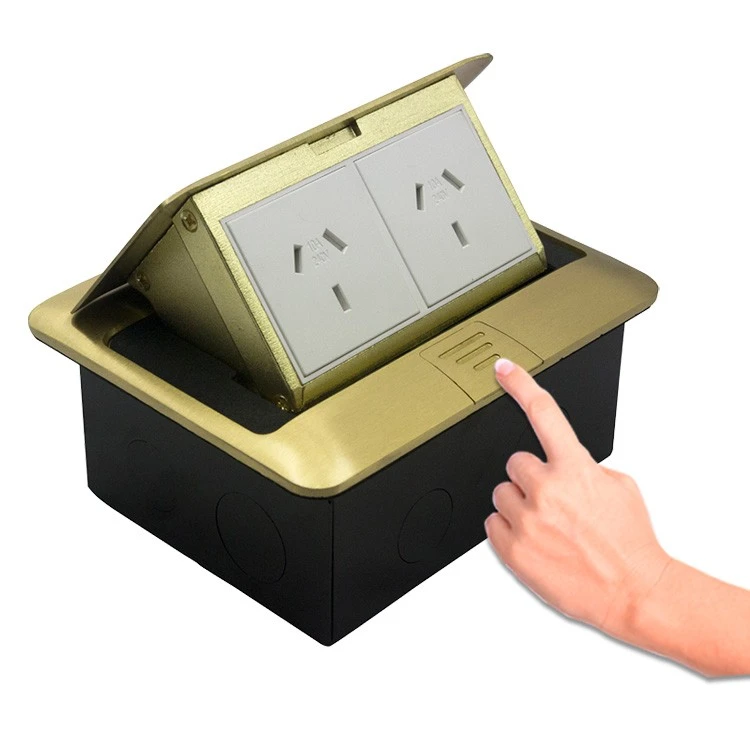
The damping feature is one of the key selling points of our Damping Pop Up Floor Sockets. To test the damping function, slowly open and close the socket's cover. The movement should be smooth and controlled, without any sudden jerks or resistance.
If the cover closes too quickly, it might not have the proper damping mechanism. On the other hand, if it's too slow or gets stuck, there could be an issue with the damping system. Our Damping Soft Close Floor Socket is designed to close gently, and this test helps ensure that feature works as intended.
3. Electrical Performance Test
This is perhaps the most important test. Use a multimeter to check the electrical continuity and voltage of the socket. First, make sure the socket is properly connected to the power source. Then, measure the voltage between the live, neutral, and earth terminals.
The voltage should be within the acceptable range for your region. For example, in most countries, the standard voltage is around 220 - 240V. If the voltage is too high or too low, it could indicate a wiring problem or a faulty socket. Also, check for any short - circuits by measuring the resistance between different terminals. A short - circuit can be extremely dangerous and can cause electrical fires.
4. Plug - in Test
Insert different types of plugs into the socket to check if they fit properly. The plugs should fit snugly without being too loose or too tight. This is important because a loose plug can cause arcing, which is a major safety hazard.
Test both standard plugs and any specialized plugs that the socket is designed to accommodate. For example, if the socket has USB ports, test different USB - powered devices to make sure they charge properly. Our Brass Electrical Floor Socket is designed to work with a variety of plugs and devices.
5. Durability Test
A good floor socket should be able to withstand regular use. To test the durability, open and close the socket's cover multiple times. This simulates the wear and tear it will experience in real - world use.
Check for any signs of wear, such as loose parts or a decrease in the damping performance. If the socket starts to show signs of damage after a few cycles, it might not be durable enough for long - term use.
6. Water and Dust Resistance Test
Since floor sockets are often exposed to the elements, it's important to test their water and dust resistance. You can use a spray bottle to lightly mist the socket with water. Make sure the water doesn't penetrate the socket's interior.

For dust resistance, you can use a fine powder and see if it can get into the socket. A good floor socket should have a high level of protection against water and dust, especially if it's going to be installed in a high - traffic area or an outdoor location.
Why These Tests Matter
These tests are not just for show. They ensure that the floor sockets we supply are safe, reliable, and of high quality. By performing these tests, we can identify any potential issues before the sockets are installed in a building.
For example, a faulty socket can cause electrical problems, which can lead to power outages, equipment damage, or even fires. By catching these issues early, we can save our customers a lot of time, money, and hassle.
Conclusion
Testing the functionality of a new damping pop up floor socket is a multi - step process that involves visual inspection, damping function tests, electrical performance tests, plug - in tests, durability tests, and water and dust resistance tests. Each test is important in its own way and helps ensure that the socket meets the highest standards of quality and safety.
If you're in the market for high - quality Damping Pop Up Floor Sockets, we'd love to talk to you. Our team of experts can answer any questions you have and help you find the right socket for your needs. Whether you're a contractor, an architect, or a homeowner, we're here to provide you with the best products and service.
References
- Electrical Safety Standards Manual
- Product Design and Testing Guidelines for Floor Sockets


