


Can I use a garden power floor socket for an electric vehicle charger in the garden (if applicable)?
As a supplier of garden power floor sockets, we often receive inquiries from customers about the feasibility of using our products for electric vehicle (EV) charging in the garden. This is a valid and increasingly relevant question, considering the growing popularity of electric vehicles and the desire to charge them conveniently at home. In this blog post, we will explore the technical and practical aspects of using a garden power floor socket for EV charging, and provide some guidance on making the right choice.
Technical Considerations
The first thing to consider is the electrical capacity of the garden power floor socket. Electric vehicle chargers typically require a significant amount of power, especially for fast charging. The power requirements of an EV charger can vary depending on the type of charger and the vehicle's battery capacity. For example, a Level 1 charger, which is the slowest type of charger, typically requires a 120-volt outlet and can provide a charging rate of about 2-5 miles of range per hour. A Level 2 charger, on the other hand, requires a 240-volt outlet and can provide a charging rate of about 10-60 miles of range per hour.
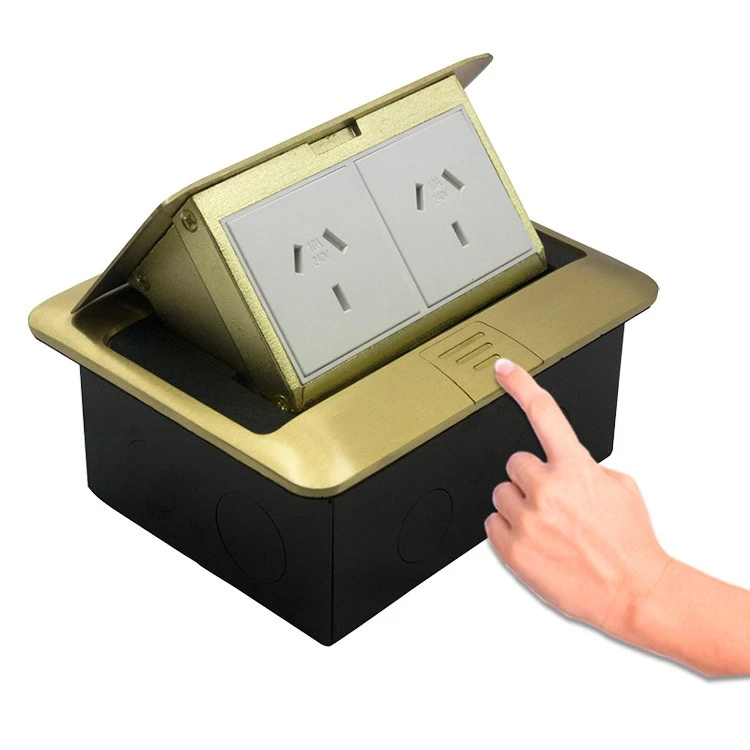

Most garden power floor sockets are designed to handle a maximum load of 15-20 amps at 120 volts or 30 amps at 240 volts. This means that they may not be suitable for high-power EV chargers, especially those that require more than 30 amps. Before using a garden power floor socket for EV charging, it is important to check the electrical capacity of the socket and the power requirements of the charger. If the socket does not have enough capacity, it may overheat or cause a circuit breaker to trip, which can be a safety hazard.
Another important consideration is the safety features of the garden power floor socket. Electric vehicle charging involves high voltages and currents, which can be dangerous if not handled properly. Therefore, it is important to choose a garden power floor socket that has appropriate safety features, such as ground fault circuit interrupters (GFCIs), surge protectors, and waterproofing. GFCIs are designed to detect and interrupt electrical currents in the event of a ground fault, which can prevent electric shock. Surge protectors are designed to protect the charger and the vehicle from power surges, which can damage the electrical components. Waterproofing is important to protect the socket from moisture and water damage, which can also be a safety hazard.
Practical Considerations
In addition to the technical considerations, there are also some practical considerations to keep in mind when using a garden power floor socket for EV charging. One of the main considerations is the location of the socket. The socket should be located in a convenient and accessible location, such as near the parking area or the driveway. It should also be located in a dry and protected area, away from water and moisture. If the socket is located in an area that is exposed to the elements, it may need to be protected by a weatherproof cover or enclosure.
Another practical consideration is the length of the charging cable. The charging cable should be long enough to reach the vehicle from the socket, but not too long that it becomes a tripping hazard. It is also important to choose a charging cable that is rated for the power requirements of the charger and the vehicle. A cable that is too thin or too short may not be able to handle the electrical current, which can cause the cable to overheat or damage the charger.
Finally, it is important to consider the installation and maintenance of the garden power floor socket. The socket should be installed by a qualified electrician, who can ensure that it is installed correctly and safely. The electrician should also check the electrical system of the house to ensure that it can handle the additional load of the EV charger. Once the socket is installed, it is important to maintain it regularly to ensure that it is in good working condition. This may include checking the connections, cleaning the socket, and replacing any damaged parts.
Choosing the Right Garden Power Floor Socket
If you have determined that a garden power floor socket is suitable for EV charging in your garden, the next step is to choose the right socket. There are several factors to consider when choosing a garden power floor socket, including the electrical capacity, the safety features, the location, and the price.
When it comes to electrical capacity, it is important to choose a socket that has enough capacity to handle the power requirements of the charger. As mentioned earlier, most garden power floor sockets are designed to handle a maximum load of 15-20 amps at 120 volts or 30 amps at 240 volts. If you need a higher capacity socket, you may need to consider a commercial-grade socket or a custom-made socket.
In terms of safety features, it is important to choose a socket that has appropriate safety features, such as GFCIs, surge protectors, and waterproofing. These features can help to prevent electric shock, power surges, and water damage, which can be a safety hazard.
The location of the socket is also an important consideration. The socket should be located in a convenient and accessible location, such as near the parking area or the driveway. It should also be located in a dry and protected area, away from water and moisture.
Finally, the price of the socket is also a factor to consider. Garden power floor sockets can vary in price depending on the brand, the features, and the capacity. It is important to choose a socket that is within your budget, but also meets your needs and requirements.
Our Garden Power Floor Sockets
As a supplier of garden power floor sockets, we offer a wide range of products that are suitable for EV charging in the garden. Our Garden Power Floor Socket is designed to handle a maximum load of 30 amps at 240 volts, which makes it suitable for most Level 2 EV chargers. It also has a number of safety features, such as GFCIs, surge protectors, and waterproofing, which can help to prevent electric shock, power surges, and water damage.
In addition to our standard garden power floor socket, we also offer a Damping Pop Up Floor Socket, which is designed to be more convenient and user-friendly. The damping mechanism allows the socket to pop up smoothly and quietly, and the socket can be easily retracted when not in use. This makes it ideal for use in the garden, where the socket may need to be hidden or protected when not in use.
We also offer a Brass Electrical Floor Socket, which is made of high-quality brass and has a durable and stylish design. The brass construction makes the socket resistant to corrosion and wear, and the socket can be easily installed in a variety of locations.
Conclusion
In conclusion, using a garden power floor socket for EV charging in the garden is possible, but it requires careful consideration of the technical and practical aspects. Before using a garden power floor socket for EV charging, it is important to check the electrical capacity of the socket and the power requirements of the charger, and to choose a socket that has appropriate safety features. It is also important to consider the location of the socket, the length of the charging cable, and the installation and maintenance of the socket.
If you are interested in using a garden power floor socket for EV charging in your garden, we invite you to contact us to discuss your needs and requirements. Our team of experts can help you choose the right socket for your application, and can provide you with installation and maintenance services. We look forward to hearing from you and helping you to charge your electric vehicle safely and conveniently in your garden.
References
- Electric Vehicle Charging Standards and Guidelines, U.S. Department of Energy
- National Electrical Code (NEC), National Fire Protection Association
- Garden Power Floor Socket Product Manuals, [Our Company]


